
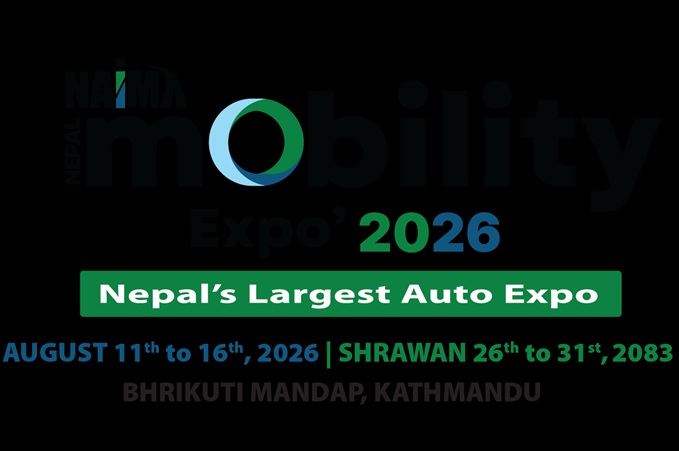
Huge Potential for FDI in Nepal’s Mobility and Electric Vehicle Sector: NAIMA Nepal Mobility Expo 2026

August 12, Kathmandu.
With the increasing use of electric vehicles (EVs) in Nepal, the mobility sector has begun to emerge as a new potential area capable of attracting foreign direct investment (FDI).
Focusing on this potential, the ‘NAIMA Nepal Mobility Expo 2026’ has seen extensive discussions on investment, technology transfer, and the development of green transportation systems.
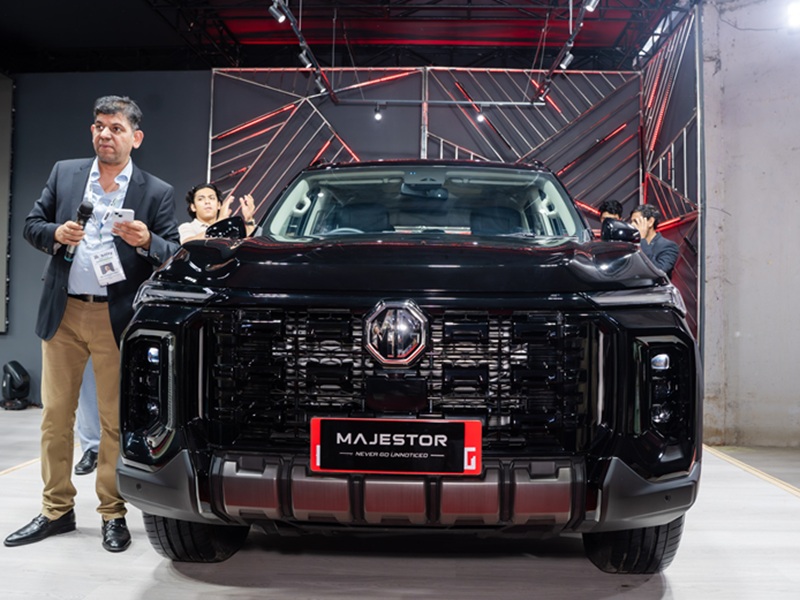
On Tuesday, the first day of the expo organized by the Nepal Automobiles Importers and Manufacturers Association (NAIMA), over 29,000 people visited. Various brands launched 48 new vehicle models.
According to the organizers, approximately 150,000 visitors are expected to attend throughout the expo.
At the inauguration ceremony, NAIMA President Ritu Singh Baidya stated that Nepal’s mobility sector is in a phase of rapid transformation, and it should be understood not merely as a vehicle sales market, but as a sector linked to investment, technology, and job creation. She noted that policy instability has increased uncertainty among new investors and emphasized the need for long-term and predictable policies.
Speakers participating in a special discussion titled ‘Investment and Foreign Direct Investment (FDI): Mobility-Fueled Economic Growth,’ held on the first day of the expo, stated that sufficient groundwork has been laid in Nepal’s mobility sector to attract foreign investment.
They said that the increase in hydropower generation, the growing demand for electric vehicles, and the expansion of charging infrastructure could attract the attention of international investors.
Advertisement
Dr. Satyendra Timilsina, Executive Director of Nepal Rastra Bank, stated that industries based on green economy and clean energy are becoming a global investment priority, and Nepal can benefit from this.
Manoj Gyawali, CEO of Nabil Bank, opined that the mobility sector should be viewed not just as an automobile business, but as an integrated economic ecosystem connected with energy, finance, infrastructure, and technology.
According to business professionals, with the increasing sales of EVs in Nepal, significant investment opportunities are being created in areas such as charging networks, battery management, spare parts production, assembly plants, and technical manpower development. They believe that if policy stability can be maintained, Nepal could become an attractive destination for green mobility investment in South Asia.
Anjan Shrestha, President of the Federation of Nepalese Chambers of Commerce and Industry, stated that the automobile sector should not be viewed merely as a means of revenue collection, but should be linked with industrial development and investment promotion.
Kamlesh Agarwal, President of the Nepal Chamber of Commerce, noted that the mobility sector contributes approximately 7 percent to the country’s Gross Domestic Product, and new investments in this sector will further expand economic activities.
According to business professionals, the NAIMA Expo is expected to play a role not just as a venue for showcasing new vehicles, but as a platform to present to the international community Nepal’s potential to attract green transportation, technology transfer, and foreign investment.
For more: Driving FDI in Nepal