
Technical Problem in Standard Chartered’s Express Check Clearing: Customers Troubled for 3 Days

27 Bhadra, Kathmandu.
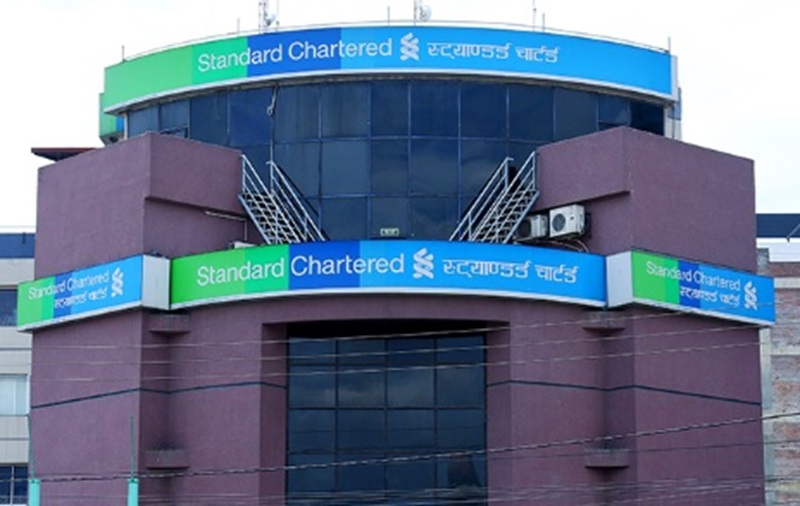
A delay of even a few hours in banking transactions can have a significant financial impact. However, customers have complained that they were unable to receive services from Friday to Sunday due to a systemic problem related to Express Check Clearing at Standard Chartered Bank in Naya Baneshwor, Kathmandu.
They stated that customers who sent checks through Express Clearing expecting immediate funds were particularly affected after the system experienced issues on Friday.
According to customers, the check clearing process could not proceed on Friday due to a problem with ID access to the bank’s ‘Express Clearing’ or ‘Express Entry’ system.
After Friday’s transactions were affected, Saturday was a banking holiday, and with the problem unresolved by Sunday, customers complained that they had to wait even longer.
Three Days of Waiting for a Two-Hour Service
In Nepal, the primary infrastructure body for check clearing is Nepal Clearing House Limited (NCHL), and its electronic check clearing is ‘NCHL-ECC’. In this system, paper checks are converted into digital images and cleared electronically between banks and financial institutions, eliminating the need to physically transfer checks from one bank to another.
According to the latest data from NCHL, approximately 14.81 million check transactions were processed through NCHL-ECC in the fiscal year 2082/83.
The total value of these transactions was approximately NPR 78.73 trillion. In the previous year, approximately 14.89 million checks accounted for transactions worth NPR 76.84 trillion. This indicates that the use of checks has not been completely replaced in institutional payments.
Even with the rapid expansion of digital payments, checks are still used for large-value transactions, especially for businesses, construction companies, suppliers, real estate, education, health, trade, and various NCHL’s ‘Express Check Clearing’ services, which are designed to complete transactions faster.
According to available details, Express Clearing has a short window of approximately two hours from presentation to final settlement. That is, customers pay a fee for Express Clearing with the objective of reducing the time taken for normal check clearing and receiving funds immediately or quickly.
A technical problem in such a service affecting transactions for three days is not merely a ‘system down’ issue; it directly relates to customers’ cash flow, payment obligations, and business transactions.
What Kind of Impact on Customers?
The very purpose of Express Clearing is for customers to receive funds from checks quickly. However, due to systemic problems, if funds are not credited to the account on time, customers’ other payments can be, and often are, halted.
For example, customers state that if a businessperson who deposited a check on Friday with the expectation of it being cleared that day had planned to use that money for employee salaries, supplier payments, loan installments, or other bank liabilities, but the funds were not available on time, they would have to seek additional loans, stop transactions, or pay penalties.
Similarly, despite customers being charged an extra fee for Express Clearing, the question of who takes responsibility for the period when the service was unavailable has been persistent.
Advertisement
Complaint Registered When Asking for Answers
When queried with the bank about customers being unable to use the Express Clearing service under check clearing for three consecutive days due to a technical problem, the Client Care Center, instead of providing an immediate answer to the question about the problem, registered all inquiries as complaints and informed that the relevant branch would study the matter and send a response via email within two working days.
This shows that questions about where and at what level the technical problem actually occurred, how many customers and transactions were affected, and what the bank’s responsibility is towards customers who paid extra fees when the service was interrupted, still remain unanswered.
Claim of No System Problem
Regarding this issue, according to the information officer of Nepal Clearing House Limited, which operates check clearing and payment systems in Nepal, there is no problem with the institution’s internal system.
According to the information officer, if the problem was with the bank’s own system or identification (ID) related technical aspect, the concerned bank should have made arrangements for customers to clear checks through an alternative branch.
However, in practice, customers say that simply sending customers who came to one branch for service to another branch after a problem arises is not an immediate solution.
One customer said that especially in time-sensitive services like Express Clearing, the time and risk involved when customers have to go to another branch are significant.
Another customer responded that even if they were advised to go to another branch due to a problem on a critical banking day like Friday, office hours might end by the time they reach there. They stated that the option of ‘being able to get service from another branch’ is not practically effective.
Three Days of Disruption, Many Questions
According to customer complaints, the problem that started on Friday extended through Saturday’s holiday and into Sunday, meaning a technical issue effectively resulted in three days of service disruption. However, customers who have experienced this say that a simple answer like ‘the system is down’ is not enough in the banking system.
Serious questions have been raised against the bank regarding how many checks were stopped, what value of transactions were affected, how many customers were impacted, which system experienced the problem, when it was resolved, whether clearing fees collected will be adjusted, and who takes responsibility for the actual financial loss incurred by customers.
With the rapid expansion of digital banking and instant payment systems, customers expect not just the facility of keeping money safe with the bank, but also reliable, continuous, and timely service, but they didn’t receive that convenience, said a customer met at the bank premises.
Given that even a few hours of technical disruption in sensitive financial infrastructure like check clearing can turn into a major economic impact, banks and relevant payment system operators should have effective backup and contingency arrangements for such risks, said a customer on condition of anonymity.
‘Such incidents send a simple but serious message: the more modern banking technology becomes, the greater the risk to customers when its system fails. Therefore, simply running the system is not enough; arrangements to protect customers when the system fails must be equally strong,’ said that customer.
For more: Standard Chartered’s Express Check Clearing in Kathmandu