

August 11, Kathmandu.
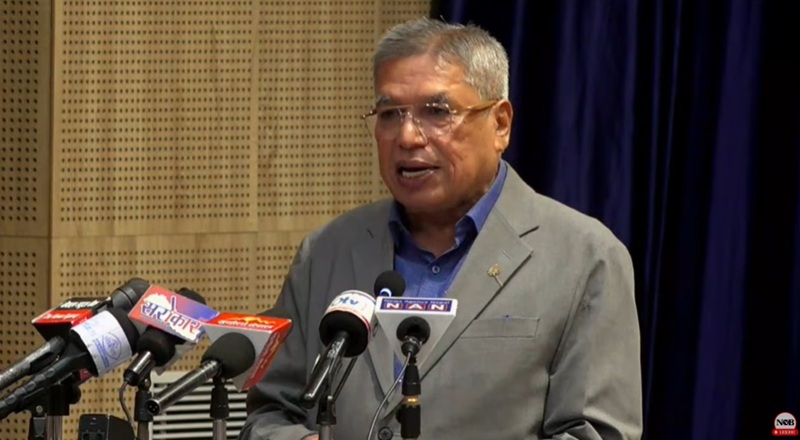
Kamlesh Agrawal, President of the Nepal Chamber of Commerce, stated that the mobility sector should not be viewed merely as a luxury or consumption sector, but rather as an engine of economic development.
Speaking on Tuesday at the inauguration ceremony of NADA Mobility Expo–2026, Chairman Agrawal stated that the mobility sector contributes approximately 7 percent to Nepal’s Gross Domestic Product (GDP). According to him, this sector has provided employment to over 1.2 million citizens directly and indirectly.
He stated, ‘Industry-related data shows that the mobility sector contributes approximately seven percent to Nepal’s Gross Domestic Product. This sector has provided employment to over 1.2 million citizens directly and indirectly. This sector is interconnected with various fields such as banking, insurance, tourism, construction, and information technology. Therefore, this sector should not be viewed merely as a luxury or consumption sector but should be accepted as an engine of economic development.’ He also noted that the mobility sector is intertwined with diverse areas like banking, insurance, tourism, construction, and information technology, and its growth would positively influence the entire economy.
Chairman Agrawal claimed that the private sector has suffered significant losses due to the government’s regulatory policies. He stated that over 150,000 entrepreneurs and businesses being blacklisted, along with the slowdown in real estate, the stock market, and productive industries, are a result of policy weaknesses.
Advertisement
Noting that the private sector holds an 81 percent share in Nepal’s total investment, he urged the government to objectively assess the impact of any new policy or regulation on the private sector before introducing it.
‘It is essential to objectively assess the impact of any new policy or regulation on the private sector before introducing it,’ he said.
Agrawal also stated that the legal provisions related to money laundering have created fear among businesspeople and the general public. He said that inquiries from the police administration, when individuals are unable to show the source of their previously earned assets, have created an atmosphere of fear in the market.
For More: Mobility Sector Economic Development