

Legal, Policy, and Financial Reforms Needed to Boost Private Investment in Infrastructure Development

8 Bhadra, Kathmandu.
The meeting of the Federal Parliament’s Infrastructure Development Committee concluded that reforms in the legal, policy, and financial environment are necessary to increase private sector investment in infrastructure development.
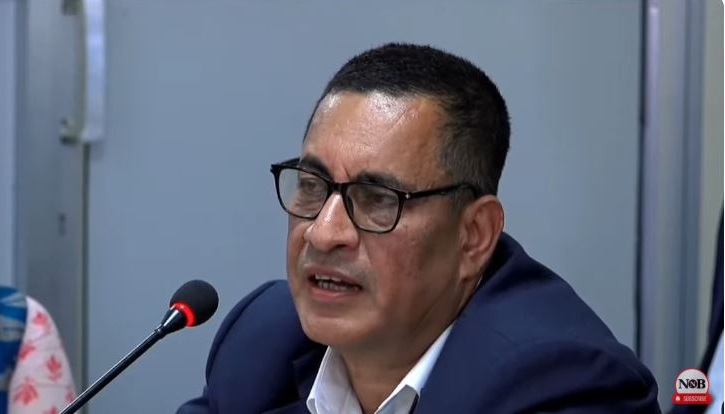
In the meeting held on Monday, Nabin Raj Singh, Joint Secretary of the Investment Board, gave an example of a significant increase in private sector investment in the hydropower sector and stated that an environment needs to be created to attract private investment in other infrastructures, including roads.
In the meeting, MP Raju Pandey questioned whether the Investment Board should identify potential investment areas and invite the private sector, or facilitate projects proposed by the private sector. He mentioned that the private sector plays a significant role in road infrastructure construction in various countries, including India, and raised the issue that private investment has not expanded as expected in the road sector in Nepal.
In response, Joint Secretary Singh stated that the private sector’s role in infrastructure development is indispensable. According to him, private sector investment in the hydropower sector has now reached 70 to 80 percent. He stated that this shows the private sector is willing to invest in infrastructure development.
‘The private sector’s role in infrastructure development is indispensable. Currently, 70 to 80 percent of investment in the hydropower sector comes from the private sector. This shows that the private sector is willing to invest in infrastructure,’ he said, ‘A necessary legal, policy, and financial environment must be created to attract the private sector to other infrastructures, including roads.’
Singh stated that the ‘One Stop Service Center,’ initiated with the aim of providing all types of services to investors from a single location, has not been fully implemented. He added that despite efforts to integrate services through various government agencies, all services could not be linked to a single system due to the Investment Board’s limited budget.
According to him, currently, investors can apply online, and the Investment Board can forward the process to the relevant bodies electronically. However, as the system is not fully integrated, the process is relatively slow. ‘It’s not that there isn’t a One Stop Service Center; it exists. But we haven’t been able to fully integrate it so that all agencies’ services can be provided from a single place,’ he said, ‘That requires significant financial resources.’
Advertisement
Singh also informed that the government has advanced the concept of connecting various government agencies to a single virtual platform under the leadership of the Department of Information Technology. He stated that once the proposed system is implemented, investors will be able to apply through a single system, after which the relevant agency will grant approval and forward the process to another agency.
Singh stated that ensuring financial resources for expanding investment in the infrastructure sector is another major challenge. He added that although ‘Viability Gap Funding’ is often discussed for development projects, there are difficulties in making the necessary budget available for it.
He cited the example of the Budhigandaki project, stating that even though the DPR (Detailed Project Report) has been prepared, ‘Viability Gap Funding’ could not be made available. He indicated that if the necessary financial resources are not ensured for advancing large infrastructure projects, private sector investment could also be affected.
Singh stated that existing acts, rules, and procedures sometimes create problems in infrastructure development. He added that although proposals for amending various acts to facilitate the private sector were advanced, the expected improvements could not be achieved during the final decision-making process.
He stated that a balance between development and conservation is necessary in forest and environmental laws. He believes that instead of viewing legal procedures as the main reason for hindering private investment, problems identified during implementation should be addressed and improved.
Singh stated that the main reason for the increase in private sector investment in the hydropower sector is the gradual professionalization of the private sector from project identification to construction. He believes that if the experience gained by the private sector in hydropower can be extended to other sectors such as roads, tourism, and urban infrastructure, private investment in infrastructure development can be increased.
For More: Private Infrastructure Investment Reforms