

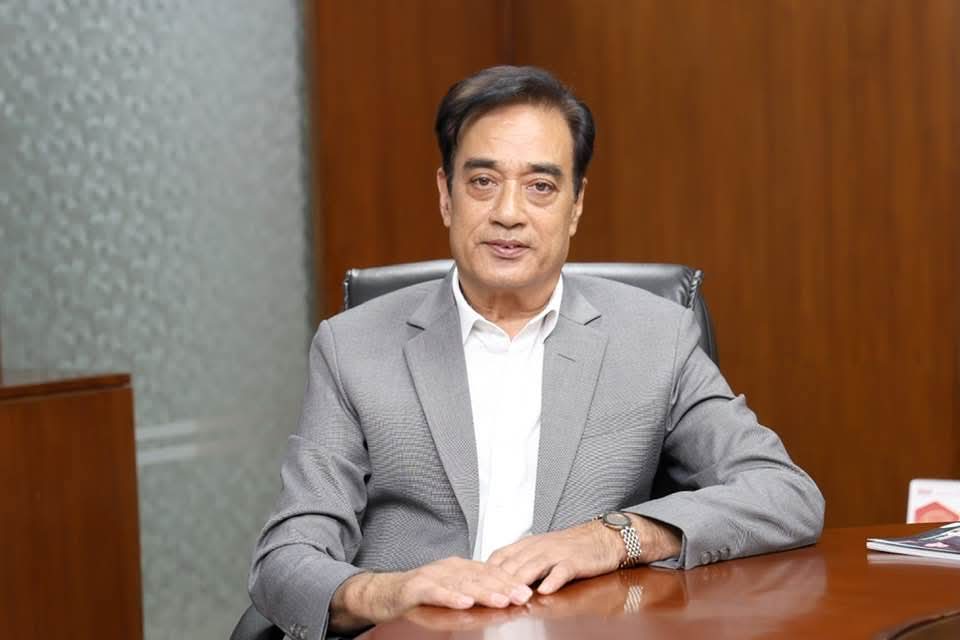
Rajendra Malla, former President of Nepal Chamber of Commerce, urges reconsideration of tax policy on electricity

4 Bhadra, Kathmandu.
Rajendra Malla, former President of the Nepal Chamber of Commerce, has urged reconsideration of the tax policy on electricity. Releasing his statement, Malla commented that the policy of imposing VAT on electricity, despite sufficient electricity production during the rainy season, which would cause further hardship and expense to the public, is not people-oriented.
Stating that the provision of imposing Value Added Tax (VAT) on electricity used by domestic, commercial, and industrial consumers will place an additional financial burden on the people, he said that the decision to impose 5 percent VAT for domestic consumers and 13 percent for commercial and industrial consumers will increase the production cost of industry, business, and service sectors, and its effect will be reflected in the price of goods and services.
Malla said, “The provision of imposing 5 percent VAT for domestic consumers and 13 percent for commercial and industrial consumers on electricity is a decision that will impose an additional burden of inflation on the people. At a time when electricity production and consumption should be increased to expand industries, businesses, and employment, such a tax policy will increase production costs and make the price of goods and services more expensive.”
According to him, Nepal’s economy is currently in a state where it needs to focus on production expansion, industrial revival, and job creation. However, adding a tax burden on a basic production sector like energy will affect industrialists, businessmen, and ultimately, the general consumers.
Advertisement
“At a time when the economy needs to be made dynamic, increasing the tax burden instead of providing relief to the people is the wrong direction for economic policy,” Malla said, “Instead of making electricity expensive, a policy that provides cheap, easy, and competitive energy to relieve industries, businesses, and general consumers is necessary.”
Malla emphasized the need to expand domestic consumption as electricity production increases. He stated that providing cheap and reliable electricity to industries, factories, tourism, agriculture, and other productive sectors would help increase production, create employment, and expand economic activities.
He said that an additional tax burden on industrial consumers would increase production costs and could weaken the competitive capacity of Nepali industries. Malla emphasized that the government should adopt a long-term policy that not only increases revenue but also encourages production and investment.
Malla has urged the government to reconsider the tax policy on electricity and adopt a policy that provides relief to industries, businesses, and general consumers, and expands economic activities.
For more: Government Must Reconsider VAT on Electricity