
Communication Minister appeals for sensitivity when publishing photos and videos of Bhote Koshi flood victims

September 4, Kathmandu.
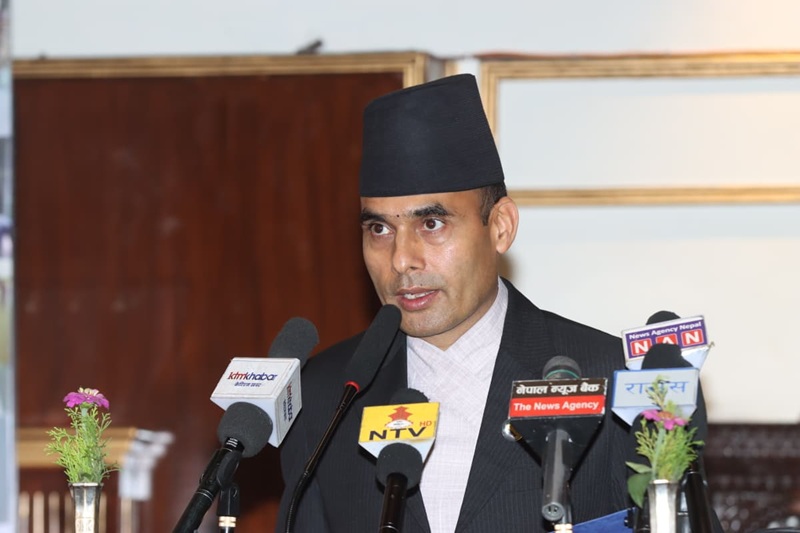
Dr. Bikram Timilsina, Minister of Information and Communication, has urged media outlets and journalists to fully respect human dignity, privacy, and security when making the pain and sensitive condition of citizens affected by the Bhote Koshi flood the subject of news.
Stating that postpartum women, children, individuals who have lost family members, and other citizens in sensitive conditions are taking shelter in the holding centers of Nuwakot and Rasuwa after the Bhote Koshi flood, Communication Minister Timilsina urged special sensitivity when publishing their personal details, photos, and videos.
Communication Minister Timilsina stated that while it is an important duty of the media to make public the reality of a disaster, it is an even more important responsibility of journalism to respect the privacy, security, self-esteem, and mental sensitivity of individuals affected by the disaster.
He also urged media personnel not to enter holding centers without coordinating with the relevant authorities. He further requested that photos, videos, or personal details revealing the identity of children and individuals in other sensitive conditions should not be published without consent, and news should be collected and disseminated in a way that does not obstruct rescue and relief efforts.
He stated that when journalism brings the reality of a disaster before society, it is necessary to place the human dignity and rights of the victims above the news subject. He emphasized that when searching for facts and truth, the value of the victim’s privacy, security, and sensitivity should not be forgotten.
Information, photos, and videos are being published on various media outlets and social networks regarding the situation in disaster-affected areas including the Bhote Koshi flood, and Rasuwa, Nuwakot, and Dhading.
The ministry has urged to rely only on information received from official sources, as false or unverified information during times of disaster can spread panic among the public and also create problems in rescue and relief efforts.
The Ministry of Information and Communication has requested prioritizing information received from official bodies such as the Ministry of Home Affairs, District Administration Office, security agencies, and local disaster management committees when publishing or broadcasting news related to disaster damage, rescue, and relief.
The ministry has also urged media outlets and social media users not to publish misleading content created using unverified, fabricated, and artificial intelligence (AI).
The ministry has made a special appeal not to post and repost heartbreaking photos, videos, or details of those who lost their lives and those affected during the disaster on social media.
The ministry states that family members who have lost relatives in the disaster may experience additional mental distress when they see terrifying images or videos related to the dreadful condition or bodies of their relatives through social media and media outlets.
Therefore, during times of disaster, the ministry has urged national and local media outlets and social media users to disseminate accurate, factual, and responsible information rather than horrifying, distressing, and fear-mongering content that creates further panic in society.
Advertisement
Meanwhile, the Press Council Nepal has expressed serious concern regarding the publication of photos and videos during the rescue and relief distribution for children affected by the Bhote Koshi flood, in a way that adversely affects their self-esteem, dignity, and privacy.
According to the Press Council, displaying the helpless condition of children in the name of relief and rescue, publishing photos and videos that reveal their identity, or disseminating content that negatively affects their psychological state goes against the spirit of the Child-Friendly Communication Guidelines, 2073.
The guidelines state that gruesome scenes related to natural disasters or accidents can have a negative psychological impact on children, therefore, media outlets must exercise special caution.
The guidelines state that when showing the condition of affected children, attention must be paid to the long-term psychological impact on them, their self-esteem should not be hurt by showing their helpless condition in the name of relief and rescue, and their identity should not be publicized in a way that has immediate or long-term negative effects.
Similarly, the council has also emphasized that children should not be put at risk by disseminating photos or audiovisual content that reveals their personal identity.
After content violating the code of conduct related to the Bhote Koshi flood was found disseminated on various media outlets and social networks, the Press Council Nepal has announced an increase in monitoring such content.
The council has stated that it is instructing the respective media to remove content violating the code of conduct, warning them as necessary, and initiating legal action.
The council has urged mass media, journalists, media personnel, and social media users not to disseminate photos and videos that psychologically affect children affected by the disaster, hurt their self-esteem, and adversely affect their privacy and dignity.
When reporting on the Bhote Koshi disaster, on one hand, the media must provide citizens with necessary information regarding the actual situation, rescue, and relief, while on the other hand, there is a need to protect the rights and human sensitivity of the victims.
The concerned bodies emphasize that especially when collecting news from children, postpartum women, individuals who have lost family members, the injured, and citizens in mentally sensitive conditions, their consent, security, and privacy must be prioritized.
The government and the Press Council have urged media outlets to be responsible and sensitive, as the tendency to exaggerate the suffering of victims, present sensational scenes, or publish content revealing personal identities in the name of increasing the impact of news during times of disaster can cause further harm to the victims.
For More: BhoteKoshi Flood Victims